Why Artificial Turf in Texas?
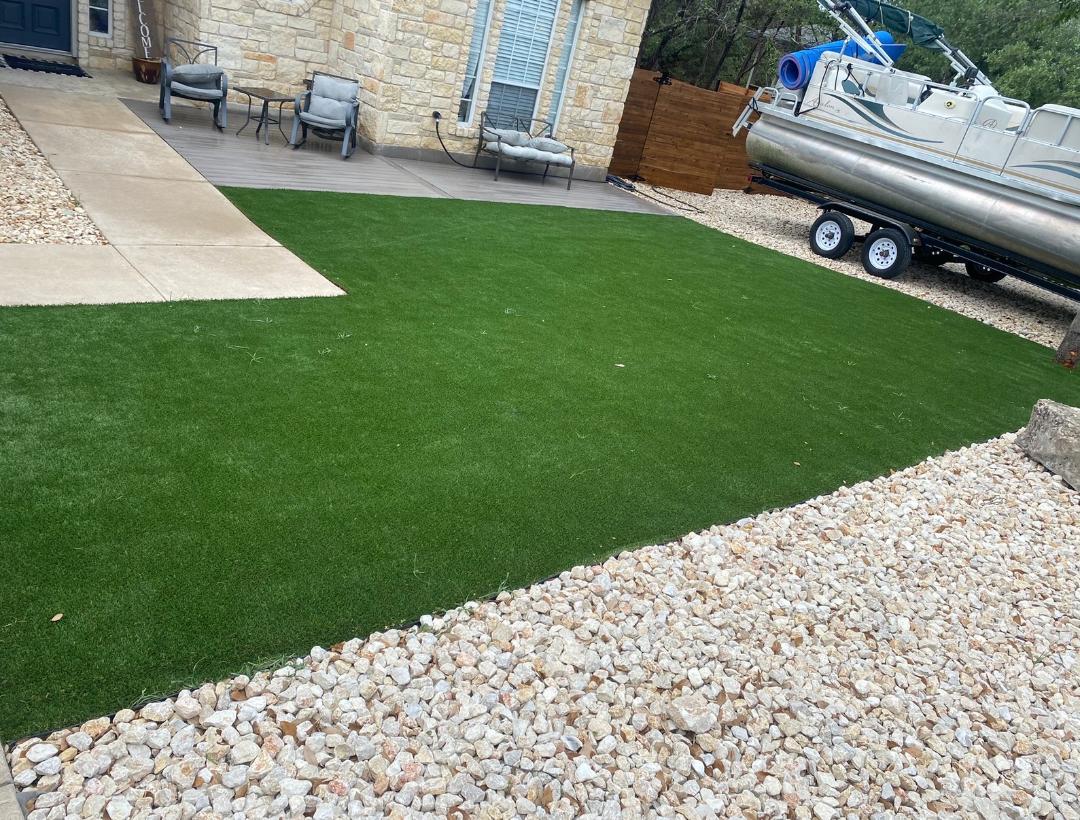
Tired of dealing with a flooding, muddy yard every time it rains, only to watch it turn into dry, crispy dirt during Texas droughts?
Artificial turf gives you a beautiful, lush, immaculate lawn year-round - no matter what the brutal Texas weather throws at it.
In Central Texas, artificial turf has become the smartest landscaping decision for homeowners who want a great-looking yard without the constant battle against heat, drought, clay soil, and high water bills.
Massive Water Savings
A typical 1,000 sq ft natural grass lawn in Central Texas can use 55,000 to 80,000+ gallons of water per year - especially during our long, brutal summers. Artificial turf uses zero irrigation after installation.
- Up to 70% reduction in outdoor water use for the average household.
- Many cities in the Austin and Hill Country area are already under Stage 1 or Stage 2 water restrictions - artificial turf is completely exempt.
- One standard athletic-field-sized natural grass area can use over 1.5 million gallons annually. Artificial turf can save hundreds of thousands of gallons per year.
55-80 gallons
saved per square foot per year compared to natural grass in Texas
Built for Texas Drought & Water Restrictions
Watering Restrictions
Texas cities frequently impose Stage 1, 2, and even Stage 3 restrictions. Artificial turf is 100% exempt - your yard stays lush green while your neighbors are forced to let their grass die.
Extreme Heat & Drought
Natural grass goes dormant or dies during 100°F+ summers and extended droughts. Our premium turf stays vibrant and usable year-round, no matter how hot or dry it gets.
No More Fines or Guilt
Stop worrying about watering restrictions, high water bills, or getting fined. Artificial turf gives you peace of mind and freedom from constant lawn care stress.
Additional Benefits
- Zero Maintenance - No mowing, fertilizing, aerating, weed control, or expensive lawn equipment.
- Pet-Friendly - Drains quickly, no mud tracking, and much easier to clean than natural grass.
- Family Safe & Usable - Always ready for play, sports, or entertaining - even right after rain.
- Heat Resistant - Stays cooler than natural grass with proper infill and stays green in extreme Texas heat.
- Long-Term Savings - Dramatically lower water bills and no ongoing lawn care costs.
- Increased Property Value - Beautiful, consistent curb appeal that stands out in any neighborhood.
- Environmental Relief - Reduces chemical runoff from fertilizers and pesticides into our lakes and rivers.
- Allergy-Friendly - No pollen, no grass clippings, and much better for allergy sufferers.
Long-Term Cost Comparison
Natural Grass
Annual costs can exceed $2,000-$5,000+ per year including water, mowing, fertilizer, equipment, and repairs after droughts.
Artificial Turf
After installation, yearly costs usually drop to under $200 for occasional rinsing and brushing.
Most homeowners fully recover their investment within 3 to 5 years through massive water and maintenance savings.
Environmental Advantages
Conserves Water
Helps protect local reservoirs and aquifers during droughts.
Reduces Chemicals
Eliminates the need for fertilizers, pesticides, and herbicides that run off into our lakes and rivers.
Lowers Emissions
No gas-powered mowers or blowers means less air pollution and noise.
Frequently Asked Questions
How long does artificial turf last?
High-quality artificial turf, when properly installed with a solid base, typically lasts 15 to 25 years.
In comparison, natural grass in Central Texas often struggles to stay healthy for more than 5-8 years before it becomes thin, patchy, and requires major renovation due to our intense heat, drought cycles, clay soil, and heavy foot traffic.
Natural grass also demands constant ongoing maintenance to stay pristine:
- Weekly mowing (20-30+ times per year)
- Regular fertilizing (4+ times per year)
- Aeration (1-2 times per year)
- Weed control, pest treatment, and overseeding
All of this adds up to significant time and money every single year.
With artificial turf, after the initial installation, your "maintenance" drops to occasional brushing and rinsing. Many of our customers are still enjoying the same beautiful lawn 15+ years later with almost zero effort.
Is artificial turf safe for pets and children?
Yes - quality modern artificial turf is very safe for both pets and children.
Our turf is made with non-toxic, lead-free materials and meets strict safety standards. The blades are soft yet durable, and we use high-quality cooling infill that helps regulate temperature so the surface stays more comfortable even on hot days. Excellent drainage technology means water flows straight through - no puddles or mud, even after heavy Texas rain.
This makes the yard usable year-round, rain or shine. Kids can play on rainy days, and dogs can run around without tracking mud into the house. Moms especially love that there are no more muddy paw prints or dirty footprints all over the floors!
Will artificial turf increase my property value?
Yes - high-quality artificial turf often boosts resale value and curb appeal, especially in Texas.
According to real estate professionals in drought-prone states like Texas:
- Homes with professionally installed artificial turf can see a 5% to 15% premium in perceived curb appeal value.
- Well-executed landscaping improvements (including turf) typically return 100% to 200% of their cost at resale (National Association of Realtors data).
- Many homeowners in the Austin and Hill Country area report faster sales and higher offers thanks to the consistent, pristine look of artificial turf.
Beyond numbers, buyers love the low-maintenance luxury - a beautiful yard that stays green year-round without the hassle or high water bills. In competitive markets, this can make your home stand out significantly.
Does it require any maintenance?
Yes, a good leaf blower is usually all you need.
How does artificial turf perform in Texas summers?
Artificial turf handles Texas summers very well when you use high-quality products - which is exactly what we install.
While any synthetic surface will warm up in direct sunlight, our premium turf is engineered specifically for intense Texas heat. It features:
- Advanced UV stabilizers that prevent fading, brittleness, and breakdown from harsh sunlight
- Heat-reflective technology in the blades that helps reduce surface temperature
- High-performance cooling infill options that can lower the turf temperature significantly compared to standard turf or hard surfaces like concrete and pavers
Most customers find our turf comfortable for barefoot use and play even during peak summer months. We also offer upgraded "cooler" turf varieties with special reflective yarns and enhanced cooling infills for customers who want maximum heat reduction.